

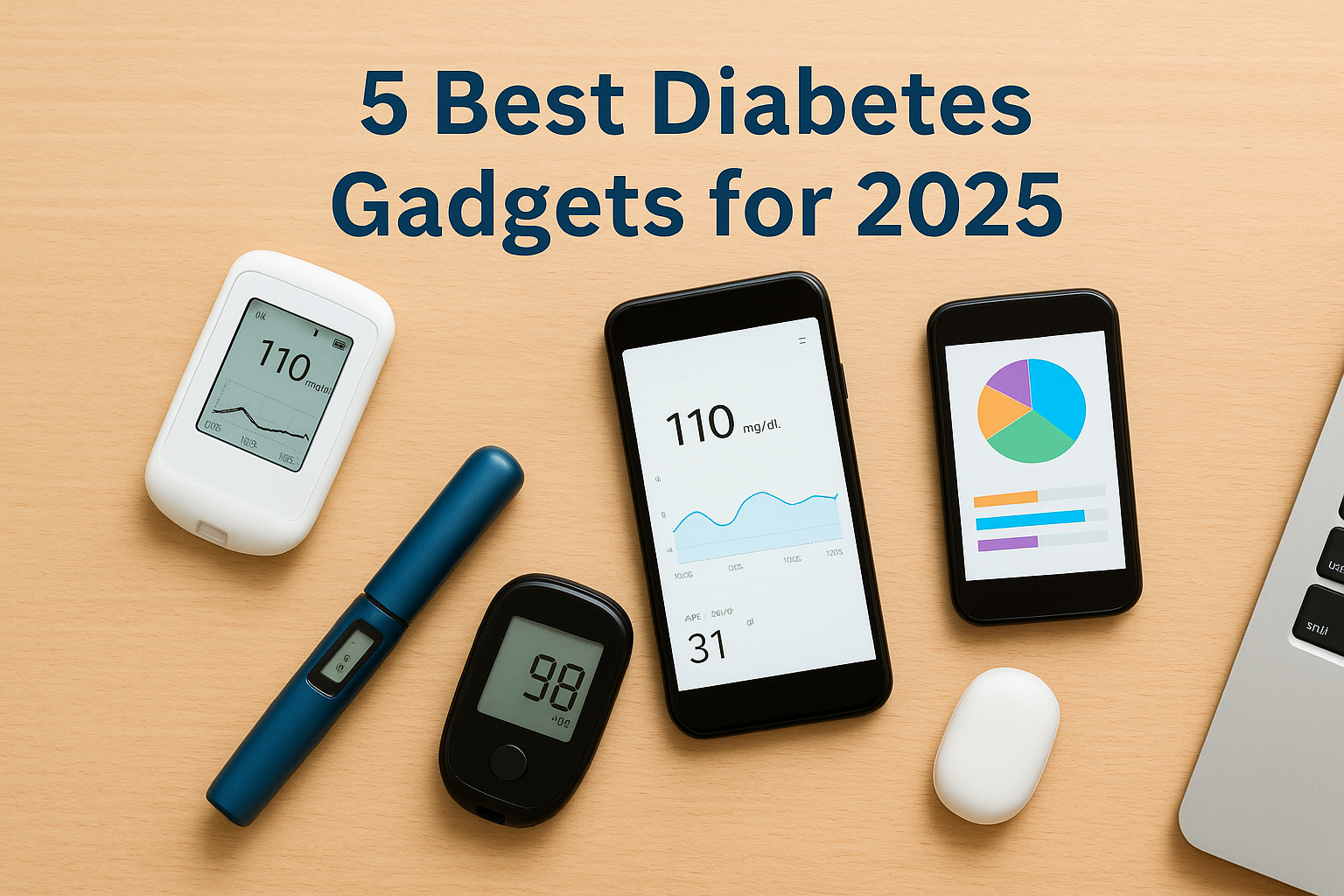
Managing diabetes has entered a new era in 2025, thanks to groundbreaking technology that empowers individuals to take control of their health like never before. From continuous glucose monitors (CGMs) to smart insulin pumps, the latest gadgets are making blood sugar management more accurate, convenient, and personalized. In this guide, we’ll explore the top diabetes tools of the year and how they’re transforming care.
🩸 Gadgets for Blood Sugar Monitoring
1. Dexcom G7 – Best Overall for Accuracy and Ease of Use
The Dexcom G7 is a continuous glucose monitor (CGM) that offers real-time glucose readings directly on your smartphone or smartwatch. Its compact design and extended 15-day sensor life make it a top choice for those seeking reliable and convenient blood sugar monitoring. type1strong.org+1
2. Abbott FreeStyle Libre 3 – Affordable and Widely Available
The FreeStyle Libre 3 provides continuous glucose monitoring with a small, discreet sensor that can be worn on the back of the upper arm. It offers real-time glucose readings and is known for its affordability and widespread availability. type1strong.org
3. Eversense 365 – First Long-Term Implantable CGM
The Eversense 365 is an implantable CGM that lasts for a full year, reducing the need for frequent sensor replacements. It’s ideal for those who prefer a long-term solution for glucose monitoring. type1strong.org
💉 Smart Insulin Pens & Pumps
4. Omnipod 5 – FDA-Approved for Type 2 Diabetes
The Omnipod 5 is a tubeless insulin pump that automatically adjusts insulin delivery based on real-time glucose readings. In 2025, it received FDA approval for use in people with type 2 diabetes, expanding its accessibility. Beyond Type 1
5. Medtronic MiniMed 780G – Advanced Insulin Pump
The MiniMed 780G is an insulin pump that uses a closed-loop system to adjust insulin delivery automatically. It aims to keep blood glucose levels within a target range, reducing the risk of both high and low blood sugar. Wikipedia
📱 Wearables & Apps for Tracking
6. Dexcom Stelo – Over-the-Counter CGM for Type 2 Diabetes
The Dexcom Stelo is the first over-the-counter CGM approved for use in people with type 2 diabetes who are not on insulin. It provides real-time glucose data and is designed to help users make informed decisions about their diet and lifestyle. TIME
7. PocDoc – Smartphone-Based Diabetes Screening
PocDoc is a smartphone app that allows users to perform a finger-prick HbA1c test, which is then scanned by their smartphone for near-instant results. This innovation aims to revolutionize diabetes screening and potentially prevent complications by enabling earlier detection. The Sun
🥗 Nutrition & Meal Planning Gadgets
While not gadgets in the traditional sense, several apps and platforms are enhancing diabetes care:
- Nutrisense CGM Plans: Offers personalized nutrition guidance based on continuous glucose monitoring data. Healthline
- Signos CGM Plans: Provides insights into how different foods affect blood sugar levels, helping users make informed dietary choices. Healthline
- Levels CGM: Delivers in-depth insights into metabolic health by analyzing glucose data. Healthline
⚖️ Pros & Cons of Tech Reliance
Pros:
- Accuracy: Advanced sensors provide real-time, precise glucose readings.
- Convenience: Wearable devices and apps streamline monitoring and insulin delivery.
- Personalization: Data-driven insights help tailor care to individual needs.
Cons:
- Cost: Some devices can be expensive, and insurance coverage may vary.
- Dependence on Technology: Technical issues or device malfunctions can disrupt care.
- Data Overload: Constant data tracking may lead to information fatigue for some users.
✅ Call to Action
Embracing the latest diabetes gadgets can significantly enhance your management of the condition. Consider trying out these tools to see which ones best fit your lifestyle. Share your experiences and reviews to help others make informed decisions. Together, we can navigate the evolving landscape of diabetes care.